

Ketamine
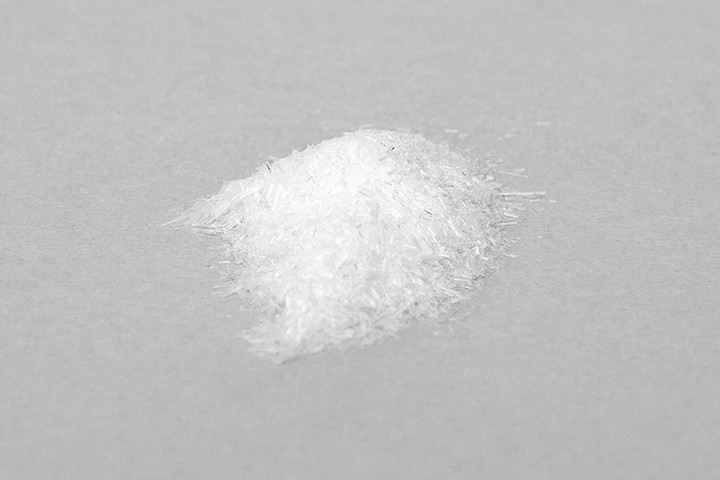
Ketamine is a synthetic anaesthetic. It was brought onto the market in the form of an injection fluid. It is used as an anaesthetic for operations and as a pain killer for people as well as animals. Ketamine (Special K, Vitamin K, Keta) is also used as a recreational drug, in much lower dosages than used medically. As a drug it’s mostly available as a crystalline powder, but it can also be found occasionally in liquid form and (very occasionally) in pill form. Ketamine as a drug is a ‘dissociative psychedelic’. Dissociation means separation: the mental awareness is being separated from the physical awareness.
History and the law §
History
Ketamine was developed in 1962 as an anaesthetic for people as well as animals. It was brought onto the market on a large scale by the firm Parke-Davis under multiple brand names like Ketalar, Ketanest, Ketaset and Aneskin. During the war in Vietnam this drug was used to enable operations being done on American soldiers right on the battlefield. Ketamine is a relatively safe anaesthetic because it hardly suppresses one’s breathing and heartbeat. Due to unwanted side effects that occurred whilst recovering from the anaesthesia (disorientation, frightening dreams and hallucinations), ketamine is being used much less in clinical practice.
Specifically due to these side effects ketamine was experimented with in the therapeutic circuit. The American psychiatrist John Lilly published his book ‘The Scientist’ in 1978. In it he wrote about his own experiments with ketamine. In Russia, psychiatrists treated alcoholics with ketamine, with differing outcomes.
During the 90’s ketamine starts to come up in the New York and British club circuit. Ketamine starts being written about in a lot of different lifestyle magazines. At the end of the 90’s ketamine is found in alternative circuits around the Netherlands.
Nowadays, ketamine is still used in veterinary surgeries. On people it’s used for treatment of chronic (nerve) pain and with burns. It’s also still used on young children and older people, because they’re a lot less sensitive to the side effects, also because it suppresses the breathing a lot less. It’s almost always administered in combination with benzodiazepines to suppress the hallucinations.
Since the year 2000, there is a newfound interest in ketamine for its antidepressant effects. There are several scientists researching this now (2015), to see if it is suitable as an official treatment.
The law
Ketamine falls under the drug supply law, which means only doctors can prescribe and apply it. Check the theme Drugs and the law for more information.
↑ Back to menu↑ Back to topKetamine’s modes of use§
On the drug market, ketamine most commonly occurs as a crystal-like powder. It’s usually snorted. Ketamine can also occur in liquid form. Then it can be injected in the muscle tissue for a really powerful experience. The liquid can also be boiled, then only the crystal-like powder will remain. Ketamine in pill form is hardly found in the Netherlands. The biggest part of the ketamine that is used recreationally, is produced within the pharmaceutical industry and later finds its way into the illegal circuit.
↑ Back to menu↑ Back to top
Ketamine’s dosage§
To indicate a dosage is always difficult. With what dosage you reach the desired effect, depends on the effect that you desire. Do you only want to feel a little bit vague or do you want a real ketamine trip or do you want to reach the k-hole? In addition, it’s also dependent on a lot of different factors, which you can read under ‘ketamine’s effects’. Besides, tolerance for the ‘psychedelic effects’ is built up quickly. So you quickly need a higher dosage to reach the same effect. So keep this in mind! If, after regular use, you haven’t used anything for a while, start with a much lower dosage.
For snorting, the dosage can vary between 15 to 150 mg ketamine. With dosages from 50 mg it’s advisable to lie down. When you snort ketamine, you’ll feel the effects within 5 to 15 minutes. The whole experience takes between 45 and 60 minutes. (Watch out: to reach the same effects, the ketamine dosage you need is a lot lower than, for example, the cocaine dosage).
Ketamine can also be swallowed. This dosage varies between 75 and 500 milligrams. Depending on your stomach contents the effects start to come up between 20 and 60 minutes after intake. The experience lasts between 1 and 3 hours, with after-effects that can last equally as long.
For injecting ketamine in the muscles (intramuscular administration, I.M.), the dosage is usually between 50 and 125 mg, you feel the effects after 3-5 minutes and the experience lasts between 30 and 45 minutes.
Ketamine in powder form can be cut up, so always test your ketamine.
↑ Back to menu↑ Back to topKetamine’s effects§
The mood that you’re in, how you’re feeling and the place you’re at whilst using can all influence the effect. Especially if we’re talking about psychedelics like ketamine. Personal factors can also play a big role. One person might get agitated easily by a drug, whilst someone else gets very meek. In the end, everybody, every person and every situation is different.
Check Drugs, set and setting for more information.
Ketamine is a dissociative psychedelic. This means that you experience a separation between your mind and your body.
Mental effects
- Dreamy, floaty buzz
- Dissociative effects
- Possibly confusion and a bad trip
- Possibly an insightful experience
- With a low dosage ketamine the effect is more of a mild, alcohol-like, dreamy, floaty intoxication. With a higher dosage it’s more the dissociative effects that are prevalent. This can come up in differing strengths.
Below are some of the possible dissociative effects:
- The feeling that your hands don’t belong to your body anymore;
- Your body could feel differently, like it’s made out of wood, rubber or plastic;
- Body parts feel a lot bigger or smaller than they actually are;
- Not knowing where your arms or legs are anymore;
- The density of your body diminishes, like it’s dissolving in the atmosphere;
- Not feeling if something is your own body part or someone else’s;
- Your mind could be in a totally different dimension to your body;
- Stepping outside of your body (out-of-body experience).
You could have the feeling like there is light streaming through your body, whilst your mind is travelling through other dimensions via multiple tunnels. Visual hallucinations (especially with closed eyes) and changing perceptions of time, insights into the cosmos, existing and being are all things that are also mentioned a lot by users.
K-hole
A very strong ketamine experience is also called a k-hole: the feeling like you’re dying, flying through a tunnel at high speed, intense hallucinatory effects, telepathic contacts or the ultimate timelessness can all be part of such an experience. If the k-hole is an unwanted effect as a consequence of a dose which was too high, it’s usually described by the user as a very negative experience.
Physical effects
- Higher heartbeat and blood pressure
- An increase in saliva production
- The dilation of airways
- Disorientation
- Trouble with coordinating movement (drifting, ‘robot’ walk)
- Possibly nausea
- Possibly stiff muscles
- Ketamine has the possibility of nausea; if you take a ketamine dose that is too high and you pass out, you could choke in your own vomit
- By using ketamine you could get disoriented and have trouble coordinating your movement. Therefore, there is a chance of falling and tripping which means that accidents can easily happen
- You could be overwhelmed with the intensity of the experience or have a bad trip
- Ketamine numbs, you don’t feel any pain, so you could get hurt without even noticing it
- Combining ketamine with downers such as alcohol or GHB could lead to unconsciousness
- If you use ketamine regularly, you could build up tolerance. This means that you need more and more ketamine each time to get the same effect
- Ketamine can be mentally addictive and some people become paranoid after long-time ketamine use
- With intense use there is a risk of memory problems, bladder problems and brain damage
Ketamine’s risks§
Bladder and kidney problems
Users talk about heavy stomach aches (“k-cramp”) and feeling like they have a bladder infection. There are cases whereby the complications were very serious; blood in the urine, having to go to the toilet a lot, only peeing very little or not peeing at all anymore. The damage to the urinary tract can lead to a higher sensitivity to an infection of the bladder, the urinary tract and the kidneys which could in turn cause complete kidney failure which would then have to be treated with dialysis. If you have these kinds of complaints, immediately stop using ketamine and consult your doctor (and mention that you’ve used ketamine).
Ketamine and sleep
Ketamine seems to be used most at the end of an event. This means that ketamine is often used when there is a lack of sleep. Is there a connection between ketamine and lack of sleep? In this article we try to answer that question.
Addiction
Ketamine can be addictive. A lot more than other psychedelics, which are hardly addictive. You can become mentally dependent and your tolerance could build up which means you would need a higher dosage to get the same effects.
- If you’re wondering if your ketamine use is becoming a problem, ask yourself the following questions:
- Can I get in the right mood without using it?
- Am I thinking too much about the drug?
- Have I changed since I’ve started using (more)?
- Do I have to use more each time to reach the same effects?
- Have I been using more lately, and have I been using more each time, at more places and more often?
- Am I using more often and more than I planned to?
- Do I experience withdrawal symptoms when I’m not using? (sleeping badly, being moody, shaking, headaches, dizziness, nausea, sweating)
- Am I using to counter adverse effects (like a hangover) from previous use?
- Am I spending a lot of time using or recovering from having used?
- Am I spending more and more money on the drug?
- Am I using even though I should be doing more important stuff? Am I neglecting hobby’s and work?
- Is my use provoking problems with my friends, partner, family?
- Do I keep using constantly even though I know it’s damaging (physically damaging and damaging to your social life)?
The more often you answered yes to these questions, the more you’re in the danger zone. If you need more information about addiction or how you can handle it, send an e-mail to [email protected]
↑ Back to menu↑ Back to top§
↑ Back to menu↑ Back to topCombined use of ketamine and other drugs§
Combining different drugs is extra risky and unpredictable. If you combine, the risk to your health is higher. Besides, there hasn’t been much research into the risks of combining different drugs. Here we’ll describe the effects and risks of a couple of common combinations or that are particularly risky. For more information, check the theme Drugs and combination use.
Ketamine and downers
The combination of ketamine with (high dosages of) downers like alcohol and GHB could lead to the suppression of breathing and unconsciousness. You could also choke if your tongue closes the airways or in your vomit.
Ketamine and uppers
The combination with stimulating drugs like cocaine or speed could be risky for people with heart and vascular diseases.
↑ Back to menu↑ Back to topDetection of ketamine in the body§
The amount of time that a drug can be detected in your blood or urine after ingesting depends on a few factors. How often and how much you’ve used and your personal metabolism (how quick the drug is broken down, mainly by your liver) are all of influence. Drugs can be found for a longer time in your urine than in your blood.
Ketamine is broken down by the liver and is excreted via the kidneys and urine. After 2-4 days it’s disappeared from your body entirely.
↑ Back to menu↑ Back to topUnity tips ketamine§
Taking ketamine with absolutely no risks is impossible. But you can limit the risks, read the Unity tips for that:
- Only use if you’re feeling physically and mentally well
- Know what you’re snorting, test your ketamine
- Only use for pleasure or relaxation. Don’t use to eliminate stress or problems
- Ketamine’s effects can be very intense, be aware of that!
- Be aware of the dose, you need a lot less than with other powders to experience the full effect
- Be careful with ketamine at parties, you can get disorientated and moving can become difficult, dancing often doesn’t happen anymore and you could trip or fall on the dancefloor. Think about if you really want this effect at a party
- Because of the effects of ketamine, participating in traffic when you’re under the influence is strongly discouraged! The same goes for cycling! Be aware that the aftereffects can last up to two hours.
- Make sure that you can sit or lie down whilst you’re using
- If you’re using for the first time, do it at home (and not at a party), start with a low dose and make sure there is someone around that does have experience with ketamine
- Nausea is a common side-effect of ketamine use, so it’s best not to eat up to 3 hours beforehand
- If you’re having a bad trip, think about the fact that in an hour you’ll feel relatively normal again. This hour could feel like a very long time, because time seems to be going very slowly
- Don’t combine ketamine with downers like alcohol or GHB, this increases the chance of passing out
- If you’ve snorted ketamine, clean your nose before you go to sleep. You can do this by cleaning the remains in your nose with a damp cotton swab, a nasal douche or a spray with water and salt, or with your fingers in the shower
- If you inject ketamine in your muscles, expect an intense experience. Make sure that you have the possibility of lying down and use only sterile material!
- If you or someone in your surroundings pass out because of ketamine, put that person on their side and make sure they’re stable and don’t cool off too much. Does someone not react to pain stimuli? Call 112
Do you want more information, do you have a question or do you want to talk about this or another drug? Look for contact details in your neighbourhood or send an e-mail to [email protected]
Read more on Ketamine:
Would you like more information, do you have a question or would you like to chat about this or another drug? Look for contact details in your area or send an email to [email protected].
↑ Back to menu↑ Back to top